React Clean Architecture: A Guide for Scalable, Testable Apps
How to structure your React projects for long-term success
d
dev@irfannzaman.my.id
Why React Developers Should Embrace Clean Architecture
React’s power lies in its ability to build dynamic and interactive user interfaces. However, as your application grows, the absence of a well-defined architecture can create a tangled mess. Intertwined logic, difficult-to-test components, and unpredictable side effects can hinder your project’s maintainability and agility.
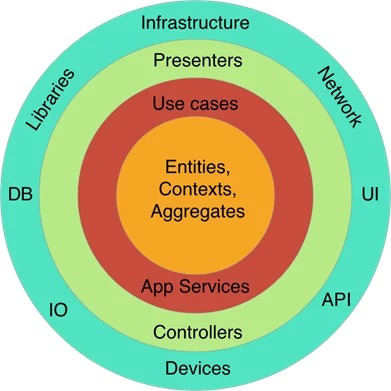
Enter Clean Architecture. Inspired by the works of Robert C. Martin (“Uncle Bob”), this approach prioritizes maintainability, testability, and the independence of your application’s core logic from frameworks and external dependencies.
Key Concepts in Clean Architecture
Separation of Concerns: Each component in your application has a clear responsibility. This decoupling makes code easier to reason about, modify, and reuse.
Dependency Inversion Principle: High-level modules shouldn’t depend on low-level details. Instead, core business logic depends on abstractions (e.g., interfaces), making it possible to swap out concrete implementations without breaking things.
The Layers of a Clean React Application
View Layer:
Purpose: The View Layer’s responsibility is to translate data into the visual elements that users interact with. Think of it as the painter of your application.
Keep it Simple: React components here should be as lightweight as possible, primarily concerned with displaying information and handling basic user input.
import React from "react";

const BlogPost: React.FC<PostViewModel> = ({
  title,
  contentSnippet,
  readingTime,
}) => {
  return (
    <article>
      <h2>{title}</h2>
      <p>{contentSnippet}</p>
      <p>Estimated reading time: {readingTime} minutes</p>
    </article>
  );
};

export default BlogPost;
UseCase Layer:
Function: The UseCase layer orchestrates the steps a user takes within your application, such as submitting a form, navigating between pages, or loading complex data.
Data Transformation: It retrieves data from repositories and maps it into a form readily consumable by your view components (view models).
import postsRepository from "@/repositories/postsRepository";
import calculateReadingTime from "@/services/readingTimeService";

const fetchPostsUseCase = async (): Promise<PostViewModel[]> => {
  const posts: Post[] = await postsRepository.getAllPosts();

  return posts.map((post) => ({
    title: post.title,
    contentSnippet: post.content.substring(0, 100) + "...",
    readingTime: calculateReadingTime(post.content),
  }));
};

export default fetchPostsUseCase;
Repository Layer:
Mission: The Repository layer isolates your application’s core logic from the specifics of data storage. Whether it’s a local database, a cloud service, or even browser storage, the repository hides the details.
API-like interface: Repositories offer a consistent way to get, change, and potentially invalidate (refresh) data.
interface PostsRepository {
  getAllPosts(): Promise<Post[]>;
}

export default PostsRepository;
Adapter Layer:
Responsibility: The adapter is the concrete implementation of the repository interface, actually handling the network operations.
import PostsRepository from "@/repositories/postsRepository";

class PostsApiAdapter implements PostsRepository {
  async getAllPosts(): Promise<Post[]> {
    const response = await fetch("https://jsonplaceholder.typicode.com/posts");
    return response.json();
  }
}

export default PostsApiAdapter;
Service Layer:
Responsibility: Services encapsulate domain logic, independent of UI concerns.
const calculateReadingTime = (content: string): number => {
  const wordsPerMinute = 200; // Average reading speed
  const wordCount = content.split(" ").length;
  return Math.ceil(wordCount / wordsPerMinute);
};

export default calculateReadingTime;
Conclusion
React Clean Architecture provides a robust framework for building applications that prioritize long-term maintainability and testability. By adhering to the principles of Separation of Concerns and Dependency Inversion, your code becomes more modular, less brittle, and easier to adapt as requirements evolve.
Key Takeaways
Think in layers: Each layer has a distinct job, fostering easier troubleshooting and updates.
Interfaces are your friends: Define contracts between layers to swap implementations easily (great for testing!)
Tests are essential: Clean Architecture makes it simpler to write unit, integration, and end-to-end tests, ensuring code quality.
Start small, scale up: Introduce Clean Architecture principles gradually, even in existing projects.
Beyond the Basics
As your application grows, consider these concepts to further enhance the architecture:
Event Sourcing and CQRS: Powerful patterns for complex application state management.
Domain-Driven Design (DDD): Helps bridge the language gap between developers and domain experts.
Dependency Injection (DI) Frameworks: Can streamline the process of wiring components together.
Continuous Improvement
Clean Architecture is a journey, not a destination. Stay curious, learn from others, and don’t be afraid to experiment with different approaches. By investing in a well-structured architecture, you’ll build React applications that gracefully withstand the test of time.
Clean ArchitectureSoftware ArchitectureDomain Driven DesignDDDSOLID PrinciplesSoftware EngineeringLayered ArchitectureClean CodeDesign PatternSeparation of ConcernsDependency InjectionDomain LayerUse Case LayerInfrastructure LayerPresentation LayerScalable ArchitectureMaintainable CodebaseReact Clean ArchitectureNode.js Clean ArchitectureFrontend Architecture